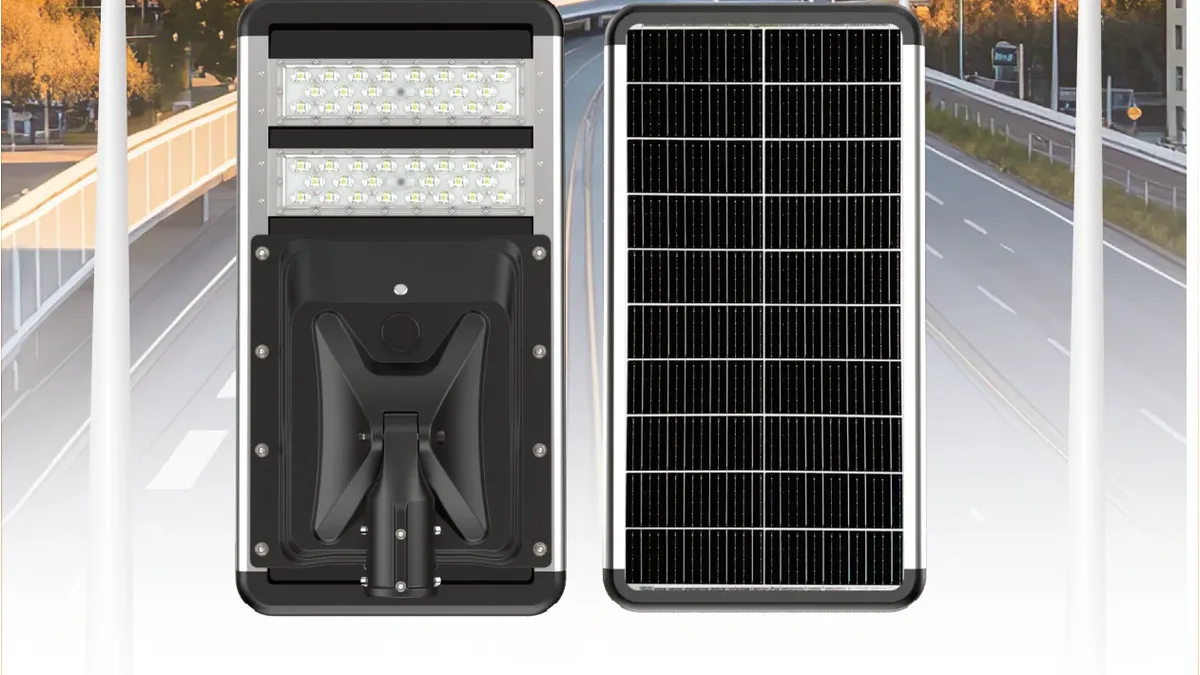
A solar retrofit reuses the pole, the foundation and often the conduit already on site, and replaces the luminaire, panel, battery and controller. It is cheaper and faster than a new build only when the existing pole passes three checks: structural capacity, mounting interface, and the lighting level the site has to keep meeting. This guide walks through those checks, the old circuit nobody wants to own, and the documents a retrofit quotation should contain.
What a Retrofit Replaces, and What It Does Not
A retrofit swaps the light source and its energy supply, not the civil works. The pole, footing, base plate and usually the conduit stay. What changes is the head, the panel, the battery, the controller, and the way the old circuit is isolated. That split is also the split in responsibility, so write it into the purchase order before measuring.
The table below is the scope split most projects end up with. Where a row says supplier, it still needs a signature on a drawing: a verbal scope is the most common reason a retrofit turns into a dispute six months later.
| Element | Retrofit | New installation |
|---|---|---|
| Pole and footing | Reused; condition and capacity verified | New pole, new footing, new anchor bolts |
| Cable and conduit | Abandoned, removed, or kept as a spare path | Trenched and drawn new |
| Luminaire | New head plus an adapter bracket | New head with a matching tenon |
| Energy supply | Panel and battery added at the pole | Same, but sized with the pole |
| Controls | New controller; old photocell isolated | New controller and settings |
| Civil works | Minor: bracket, sometimes a base plate | Excavation, concrete, traffic management |
| Programme | Faster, fewer permits if nothing is trenched | Longer, and weather dependent |
Check 1: Can the Pole Carry the New Head?
The existing pole was designed for a luminaire of a certain weight and projected area, and that information is usually not available. A solar head adds a panel with real sail area, so dead load and overturning moment both rise. Until the pole's capacity is confirmed, a retrofit is a proposal, not a design.
Record these on site, not from memory:
- Height, and the height of the mounting point above finished ground
- Material (steel, aluminium or concrete) and finish: hot-dip galvanised, painted, or bare
- Taper and outside diameter at the base and at the mounting point
- Wall thickness at the access door, if the pole has one
- Plumb: a leaning pole is already using part of its capacity
- Corrosion, especially at the base and around the door frame
- Base plate size and anchor bolt circle, and any cracking in the grout
- Exposed footing, standing water, or soil erosion around the base
If no pole drawing exists, ask the supplier for the head's weight, effective projected area (EPA) and centre of gravity, then have a structural engineer check the pole against local wind data. “It is only a light” is not an answer: the panel is the part that catches wind, and on a tall pole even a modest panel produces a moment worth calculating.
Check 2: The Mounting Interface Decides Feasibility
Most retrofits fail at the bracket, not at the luminaire. Record the tenon or arm diameter, the distance from the tenon to the pole face, the arm angle and the direction the arm points. Measure with a caliper: adapters exist for common diameters, but a two-millimetre error changes the clamp you need, and the difference is usually discovered after delivery.
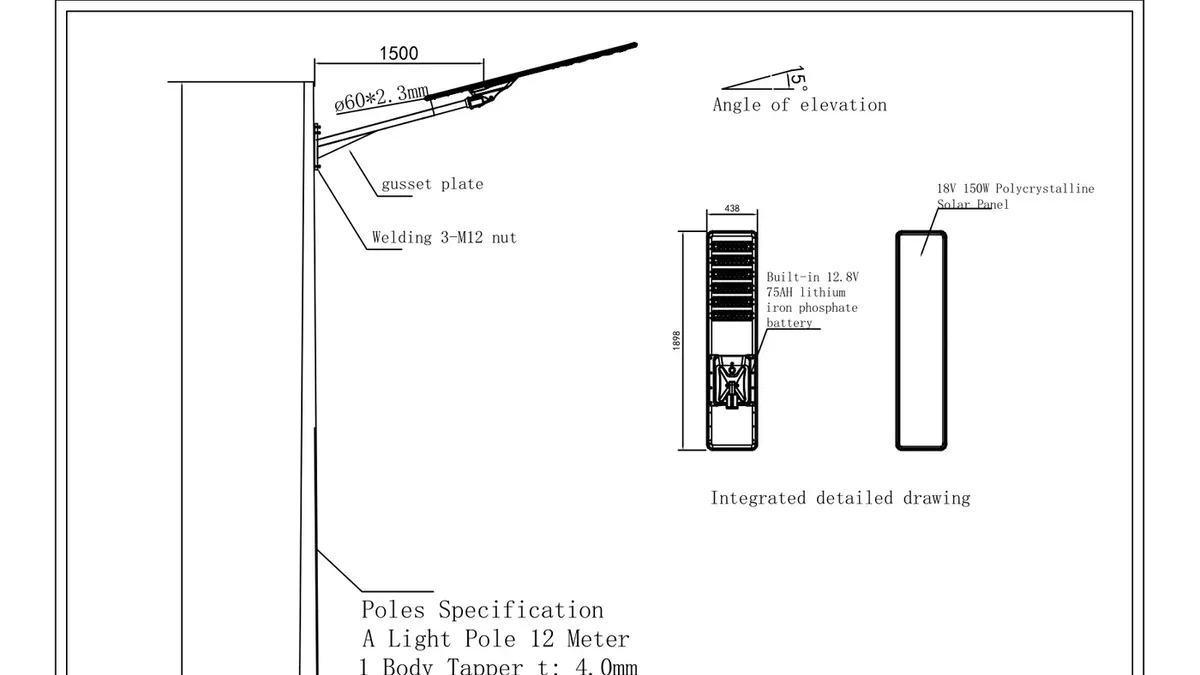
The arm direction also fixes the panel. On an arm-mounted head the panel faces whichever way the arm points, so a pole on an east-west road can give you a panel facing north. If the bracket allows only a small tilt range and the arm points away from the sun, a split system with a separately mounted panel is the honest answer, not a larger battery.
Check 3: The Old Circuit Still Has to Be Dealt With
A retrofit does not delete the existing circuit. Someone has to decide whether the cable is abandoned, removed, or kept for a grid backup, and none of those decisions belongs to the lighting supplier by default. Agree it with the asset owner before the first head comes down.
- Isolate first. De-energise at the feeder, lock out, and prove the circuit dead at the head before it is touched. A photocell that failed closed still looks like a dead light in daylight.
- Abandon in place. Disconnect at both ends, cap the conductors, and update the panel schedule so the next crew does not assume the run is live.
- Remove the cable. Copper has resale value, and reported cable theft has left large numbers of street lights dark in several US cities. Removal takes the target away, but it costs labour and disposal.
- Keep the supply. A head with a grid charger can top up the battery in a long cloudy spell, but only if the supply and the charger are both specified and the owner accepts the standing connection cost.
Check 4: The Lighting Level Is Not Automatically Preserved
A retrofit replaces a luminaire that was chosen for a lighting class, a mounting height and a spacing. The new head has to reproduce illuminance and uniformity at that geometry, not merely the wattage on its label. If the original design values are missing, measure the existing installation at night before it is removed, so the comparison is real.
Two numbers decide most arguments: average horizontal illuminance on the road surface, and uniformity, which is minimum divided by average. Record the measurement points and the meter used. A retrofit that dims after midnight will otherwise be judged on its brightest hour, and if the site is judged on the late-night level, that is a design decision to take before the order rather than after commissioning.
Check 5: The Panel Has to Survive the Site
A panel on a pole arm sees shading the original luminaire never saw: trees that grew, a new sign, a second arm, a building added next door. Shading in early morning and late afternoon costs the hours when a fixed tilt harvests least, and a retrofit inherits the orientation the pole already has.
Walk the site with a sun path and note what will shade the panel at mid-morning and mid-afternoon in the worst month. Then check access: a panel mounted high needs a platform for cleaning and inspection, while a panel mounted low is easier to reach for a technician and for a thief.
Check 6: Battery Position on an Existing Pole
Where the battery goes decides access, temperature and theft risk, and on a retrofit the choice is narrower than on a new build because the pole was not designed for it. Three placements are realistic, and each carries a cost beyond the battery itself.
- Inside the head. No external box and no extra cable, but capacity is limited and service means working at height.
- Pole-top or mid-pole box. More capacity, but the pole needs space, a fixing method and a way to lift the box. Check the door and the cable route before you promise it.
- Buried enclosure. Good thermal behaviour and out of sight, but it needs excavation, a sealed cable route, and a maintenance procedure that does not involve digging every time.
Heat is the silent variable. An enclosure in direct sun runs hotter than ambient, so the capacity that matters is the capacity at the temperature the battery will actually see, not the figure quoted at a laboratory reference. Ask for the temperature derating curve with the quotation; our battery placement comparison covers the four standard positions in more detail.
The Documents a Retrofit Quotation Should Include
A retrofit quotation is a package, not a price. The interface drawing is the first document to read, because it shows whether the supplier understood the pole you have. If a quotation arrives with a luminaire datasheet and nothing else, the interface work has not been done.
- Interface drawing with tenon or arm dimensions, adapter plate and bolt positions
- Head weight, EPA and centre of gravity for the structural check
- Wiring diagram, including where the old circuit is isolated and what stays dead
- Commissioning sheet: dimming profile, sensor settings, dusk test result, serial numbers
- Warranty statement that separates the head and the battery from the pole, and says who pays for access equipment
- Spare brackets and adapters, because a replacement head that does not fit the old bracket is a new project
Reuse or Replace: A Short Decision Table
Once the checks are done the decision is usually obvious, and a retrofit that fails one structural criterion should not be forced through on cost grounds. The table below is the version used in project reviews; the thresholds are engineering judgement rather than code requirements, so keep the reasoning with the project file.
| Criterion | Reuse the existing pole | Replace with a new pole |
|---|---|---|
| Structural record | Drawing exists, or an engineer confirms capacity | No record and no budget for a check |
| Pole condition | Plumb, no through-section corrosion, sound base | Leaning, cracked base, corrosion at the door |
| Mounting height | Fits the lighting class at the planned spacing | Too low for the road it lights |
| Interface | An adapter exists for the measured tenon | Odd diameter or non-standard arm |
| Remaining life | Longer than the warranty being bought | Shorter than the battery life |
| Site constraints | No trenching allowed, road cannot be closed | Open site, civil works already planned |
Mistakes That Appear in Year One
- Buying the head before measuring the pole, so the bracket becomes a custom job and the delivery date slips.
- Assuming the old pole's design load is about the same. The panel's sail area is the new load, and nobody calculated it.
- Leaving the old photocell or time switch in circuit and then wondering why the new light switches at the wrong hour.
- Judging the retrofit by the brightest hour, when uniformity and the late-night level are what residents and inspectors see.
- Mounting the panel where the arm points rather than where the sun is, then sizing the battery to compensate.
Frequently Asked Questions
Can any existing street light pole take a solar head?
No. A pole can carry a solar head when its capacity, mounting interface and height fit the new load and the lighting class. A pole without a drawing needs a structural check against head weight and panel sail area before the order is placed, not after delivery.
How long does a retrofit take compared with a new installation?
A retrofit is usually faster because there is no trenching, no new footing and no concrete cure time. Most of the difference comes from permits and traffic management rather than from the luminaire, and a pole that needs reinforcement or a new base plate removes the saving.
Can I keep the existing cable for a backup supply?
You can, if the supply is reliable and the head has a charger that the supplier specifies for it. The circuit must be isolated and identified while the work is done, and the owner should accept the standing connection charge that a grid-backed solar light carries.
Do I need a new lighting design for a retrofit?
You need either the drawing that produced the original spacing and mounting height, or a night measurement of the existing installation. Without one of the two there is nothing to compare the new head against, and compliance becomes an opinion instead of a record.
What is the most useful measurement to send a supplier?
The tenon or arm diameter at the mounting point, with the distance from the tenon to the pole face. Those two numbers decide the bracket, and the bracket decides whether the retrofit is a catalogue order or a custom fabrication.
Next Step: Send the Pole Measurements
Send photographs, the measured interface and the lighting class, and the quotation can be built on the pole you have. Integrated solar street lights and the rest of the range are quoted with their brackets, and our factory issues interface drawings for retrofit enquiries. Send the measurements and you will get the two mounting options side by side.