What Makes a System Off-Grid
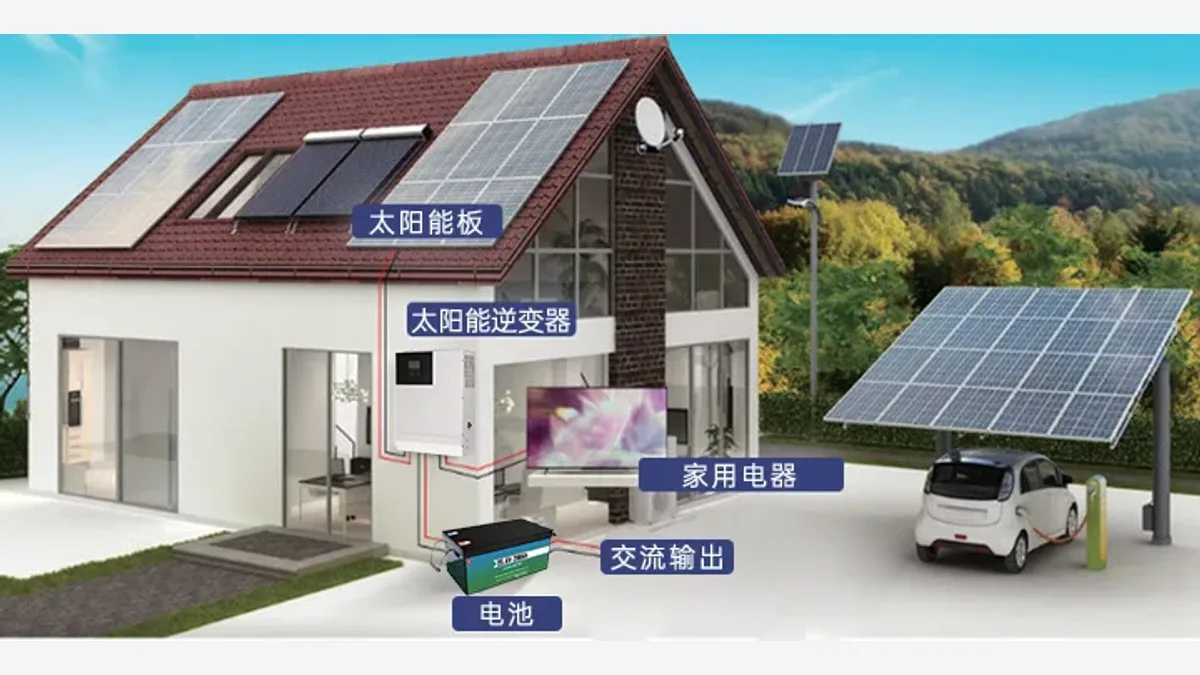
An off-grid solar system generates, stores, and delivers all of its own electricity — there is no connection to the utility grid. These systems power villages, farms, remote telecom sites, pump stations, and rural infrastructure projects across the world. The engineering principle is simple: size the system for your worst week of weather, not your best day. Solar panels, a charge controller, a battery bank, and an inverter must work together so the lights stay on through consecutive overcast days.
The Five Core Components
Solar panels convert sunlight into DC power; a charge controller (MPPT preferred for 15-30% faster charging) regulates that power into the battery bank; LiFePO4 batteries store 2-3 days or more of autonomy; an inverter converts stored DC into AC for appliances; and the distribution wiring connects everything to the loads. A quality system also includes battery management (BMS), surge protection, and proper grounding. In rural projects, reliability beats peak performance — every component should be rated conservatively and repairable locally.
Sizing: Panels, Batteries, Controller, Inverter
| Step | Rule of Thumb |
|---|---|
| Daily load | Sum all appliance wattages x hours used per day = kWh/day |
| Battery bank | Daily load x autonomy days (2-3) + 20% margin, at 80-90% DoD for LiFePO4 |
| Solar array | 1.5-2x battery capacity in panel wattage, adjusted for your sun hours |
| Charge controller | Panel current x 1.25 safety factor; match 12V/24V/48V system voltage |
| Inverter | Largest simultaneous load x 1.2, pure sine wave for motors |
Kit Options & What to Avoid
Complete off-grid solar kits bundle matched panels, batteries, controllers, and inverters — the safest choice for non-engineers because components are pre-matched and one supplier carries the warranty. What to avoid: undersized batteries (the most common failure), PWM controllers on large arrays (they waste 20-40% of panel power), mixed battery chemistries, and inverters without pure sine wave output if you run motors. For village electrification and rural road lighting, solar street lights plus a central battery system often combine into the most cost-effective solution.
Rural Project Cost Considerations
Off-grid solar costs divide into equipment, installation, and maintenance over a 10-25 year design life. LiFePO4 batteries cost more upfront than lead-acid but deliver 4,000+ cycles — typically two to five times the service life — which usually makes them cheaper per kilowatt-hour over the system's life. For government-funded rural electrification programs, documentation matters: ISO9001 certificates, CE/RoHS declarations, and complete technical files support tenders and donor requirements. As an experienced solar equipment manufacturer, VOLTIC supplies components and complete kits, with engineers available to review your load list and site data.
Browse our solar batteries, charge controllers, inverters, and off-grid components, or send us your daily load and location for a free system design and quotation.
Village Electrification: A Worked Example
Consider a 50-household village with a school and a clinic, no grid within 5km. The practical starting point is not a single big system but a tiered one: a central community battery station for the school and clinic (lights, phone charging, a vaccine fridge, a fan), solar street lights along the main paths (no wiring at all), and individual home kits for households that can afford them. A community system sized at 10kW of panels, 30kWh of LiFePO4 storage, and a 5kW hybrid inverter covers the clinic fridge and school loads with two days of autonomy. The solar street lights — 100W-150W units on 6-8m poles — remove the largest single load from the central system: public lighting. Splitting loads this way is cheaper, more robust, and easier to maintain than one giant inverter feeding everything.
Distribution and Load Management
How loads are wired matters as much as how the system is sized. Split the distribution into three circuits: critical (lights, phone charging, medical), normal (fans, TVs, small tools), and discretionary (water pumps, heavy appliances). Put critical and normal circuits on the inverter output, run the pump from a separate time-controlled contactor so it never competes with evening loads, and fit simple load-limit switches so one faulty appliance cannot brown out the whole village. In rural projects, per-household energy limits are standard practice — a 200W limit per home with a weekly allowance teaches conservation and prevents one heavy user from draining the community bank. A simple kWh meter per connection costs little and prevents most disputes.
Troubleshooting the Top Five Field Failures
In field service, five failures cover most callouts. Battery bank not charging: check the charge controller display — if panel voltage is present but current is zero, suspect a blown fuse or a disconnect switch; if panel voltage is low, the array is shaded or a panel string is open. Low battery voltage alarm at night: the bank is undersized or one pack is dragging the string down — check cell balance, replace the weak pack. Inverter shuts down under load: usually overload or thermal — check the load is within rating and the cabinet vents are clear. Controller error codes: read the manual; most codes mean wiring polarity or over-voltage from a mismatched array. Dead sockets while the inverter shows power: check the breaker and the output cable terminations — loose terminals are the quiet killer in rural installations. Keep a spare controller, a spare inverter, and one complete battery pack in the village store; that is the cheapest insurance a rural project can buy.
Cost Estimation: Worked Numbers
Rural off-grid economics are simpler than they look. A 1kW of quality polycrystalline panels costs a small fraction of the total; LiFePO4 storage is the dominant line item; the MPPT controller and pure sine wave inverter together are typically 10-15% of equipment cost; and installation, transport, and training can equal the equipment on remote sites. The often-forgotten line is maintenance: budget 2-3% of equipment cost per year for spare parts, and one battery refresh cycle at year 8-10. Against this, compare the alternative: grid extension quotes for remote villages routinely exceed the solar system cost by a factor of two or three before a single light is installed. For village road lighting specifically, solar street lights with integrated batteries are usually the cheapest per kilometer of road of any electrification option.