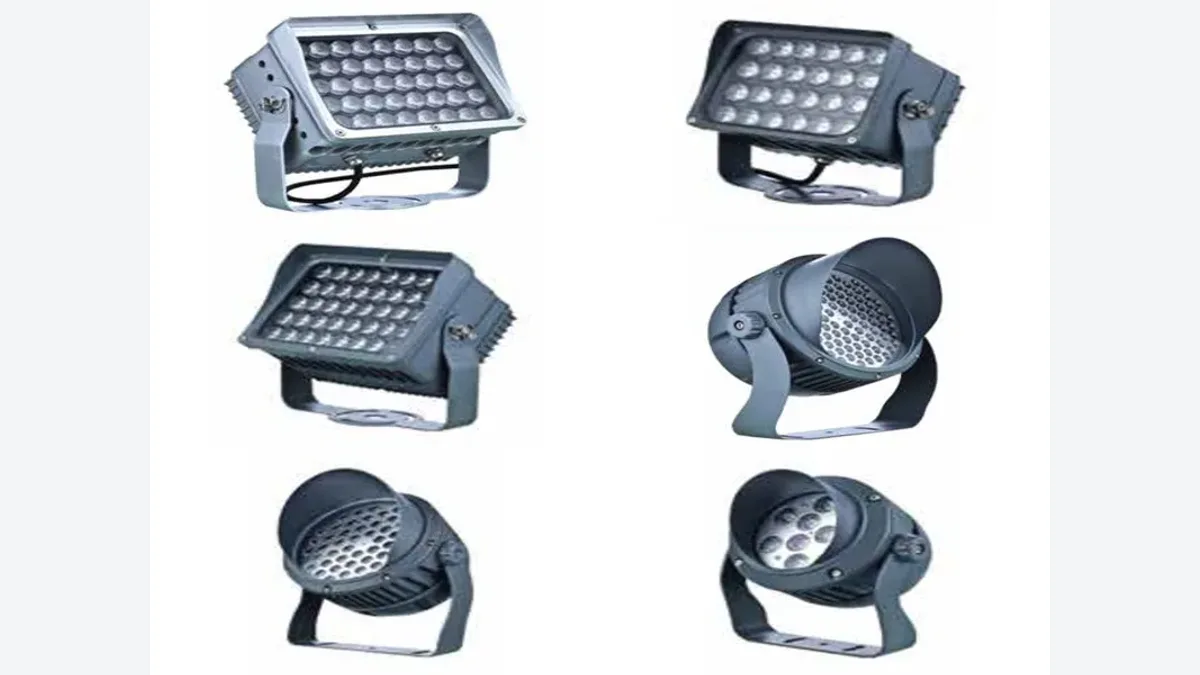
Residential vs Commercial Solar Flood Lights
Solar flood lights range from small motion-activated units for a home driveway to industrial fixtures that light warehouses, parking lots, and construction sites. The difference is not just brightness — it is build quality, battery capacity, mounting, and duty cycle. A residential unit runs a few hours with motion activation; a commercial solar flood light must run reliably every night, often on a dusk-to-dawn schedule, for years without maintenance.
Lumen Requirements by Area
| Application | Recommended Output | Notes |
|---|---|---|
| Home driveway, garden | 1,000-3,000LM | Motion-activated units save battery |
| House perimeter / security | 3,000-6,000LM | Dusk-to-dawn or motion mode |
| Warehouse yards, loading docks | 6,000-12,000LM | Commercial grade, all-night runtime |
| Parking lots, industrial sites | 9,000LM+ per pole | See our solar parking lot lights |
IP Ratings & Materials
For permanent outdoor installation, choose IP65 or better. The housing matters as much as the rating: die-cast aluminum bodies with tempered glass lenses shed rain and heat far better than plastic housings. In coastal or industrial environments, confirm the corrosion treatment — quality fixtures use anodized or powder-coated aluminum that survives salt air and chemical exposure.
Motion Sensors & Dusk-to-Dawn Modes
Two control philosophies dominate. Motion-activated flood lights run at low or zero standby and switch to full brightness when a sensor detects movement — ideal for driveways, backyards, and security perimeters where battery autonomy matters. Dusk-to-dawn flood lights run continuously from sunset to sunrise — preferred for commercial sites where constant illumination is the requirement. Many quality units support both modes. If your site needs all-night coverage with minimal energy use, look for a fixture with a photocell plus motion-sensing dimming, like the ZHENYE SERIES approach of 100% on presence and 30% standby.
Buying Checklist
Compare: lumen output (not wattage), battery chemistry (LiFePO4 preferred), panel wattage and efficiency, IP rating, housing material, control modes, warranty, and certification documents (LM-79 photometric reports, CE/RoHS). Our LED flood light series covers 50W-500W fixtures for landscape and commercial use, and our solar parking lot lights handle the largest outdoor areas. Send us your site dimensions and illumination requirement for a free recommendation.
Color Temperature and CRI: What They Change
Color temperature changes what the light does to the scene. Warm white (3000K) renders skin tones and facades naturally and suits gardens, courtyards, and hospitality areas. Neutral white (4000K) is the all-rounder for driveways and perimeters. Cool white (5000-6500K) maximizes perceived brightness and contrast — the reason security and commercial flood lights default to it — but it can look harsh in residential settings. CRI (color rendering index) matters when the light must show accurate colors: cameras and security footage benefit from CRI 80+, and showrooms or inspection areas want CRI 90+. A cheap flood light with CRI 60 makes everything look washed out, regardless of lumen count.
Mounting Height and Beam Angle
Mounting height and beam angle together determine the light patch on the ground. A wide 120-degree beam from a 3m mount covers a broad, soft pool — fine for a driveway. A 30-60 degree beam from a 6m mount produces a tighter, brighter patch — right for a loading dock door. As a rule, raising the fixture doubles the area covered but quarters the lux at the center. If the spec sheet only gives wattage and lumen, ask for the beam angle; two "100W flood lights" with 60-degree and 120-degree optics produce completely different ground patterns. For commercial sites, request the photometric file and check the pattern against your area dimensions before ordering.
Motion Sensor Settings That Actually Work
Sensor behavior is where good flood lights separate from bad ones. Check three adjustable parameters: sensitivity (how far and how small a movement triggers the light), time delay (how long it stays on after the last trigger, typically 10 seconds to 5 minutes), and the daylight threshold (the lux level below which the sensor will activate — critical if you want dusk-to-dawn operation or daytime-only deactivation). A common installation failure is a sensor aimed at the street, triggering all night from passing cars, draining the battery. Aim the sensor down and inward, set the delay to 30-60 seconds for security areas, and set the daylight threshold high enough that it stays off during the day even under cloud cover.
Commercial Project Checklist
For commercial and industrial purchases, work through a fixed checklist: count the fixtures from a lux calculation, not a guess; order 3-5% spares plus one complete unit for bench testing; confirm the warranty covers the battery separately (it is the component most likely to fail); request the LM-79 report and IP test certificate with the quotation; specify mounting brackets rated for the fixture weight; and agree on the sensor settings in writing before production. If the supplier is a factory, ask which components are made in-house — die-cast housing, LED board, and battery integration in one factory usually means better quality control and faster spare parts. The checklist takes ten minutes and saves months of after-sales trouble.