Most solar street light projects are won on unit price and lost in year three. The pole nobody can repair, the battery that was never covered by a written term and the claim that arrives without evidence all cost more than the fixture itself. On a 200-pole scheme, the gap between a warranty that works and a warranty that only exists on a quotation is measured in dark nights.
This guide is written for the people who have to live with that decision: distributors, EPC contractors, consultants and municipal procurement teams. It sets out what a solar street light warranty should actually cover, how to keep a warranty term separate from a service life, what evidence a factory needs before it ships a replacement part, how to plan spares, and which clauses belong in the contract before the order is placed.
Why Warranty Terms Decide Whether the Project Pays Off
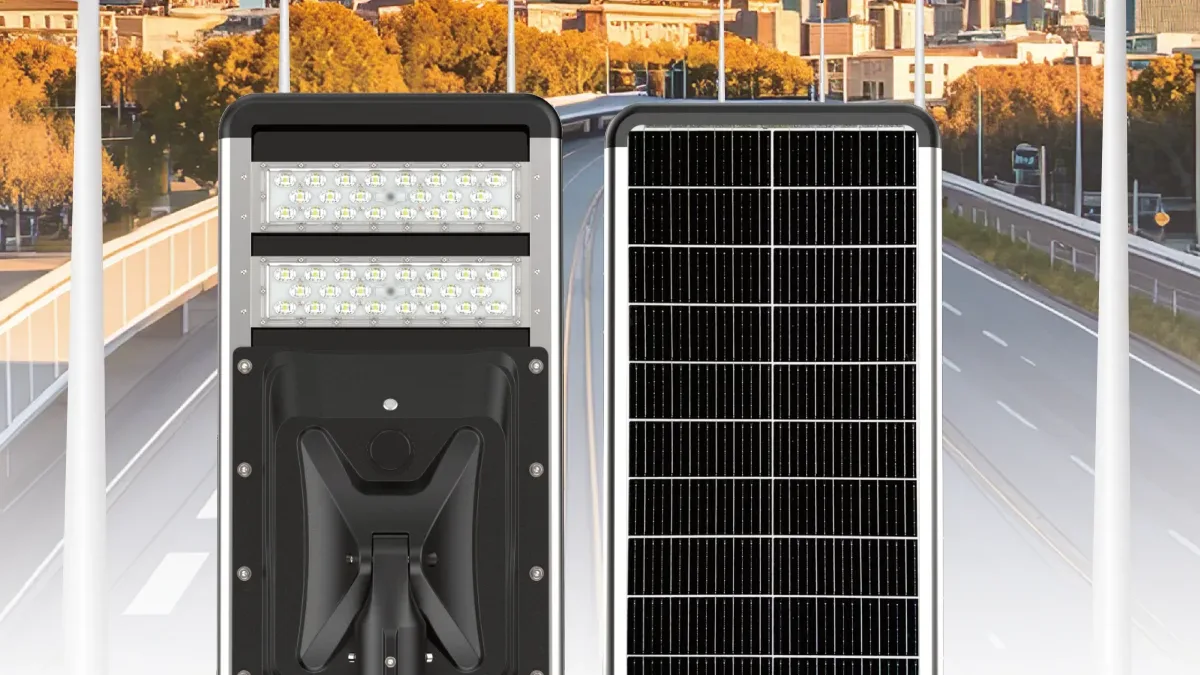
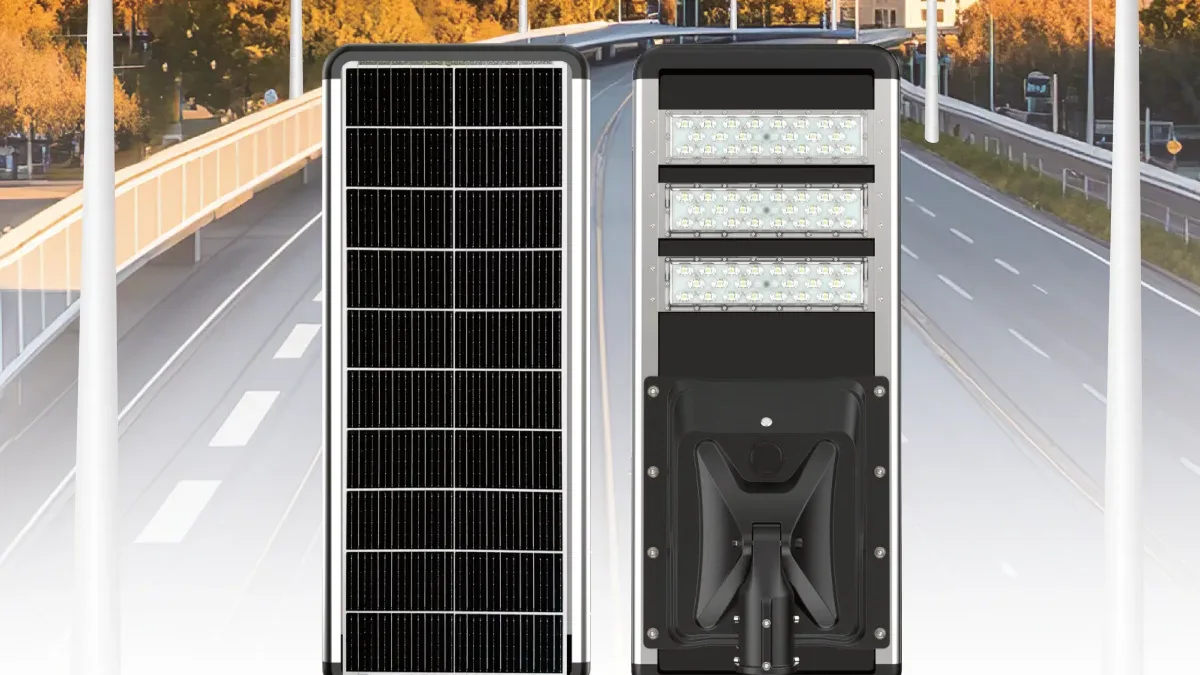
A solar street light is a small power system rather than a lamp: LED module, driver, MPPT controller, LiFePO4 battery pack, monocrystalline panel and structure share one housing and one warranty clause. A failure in any single element takes the whole pole dark, and on a 10-metre pole the callout usually costs far more than the part.
For a fleet of any size the parts are a small share of lifecycle cost, while access equipment, labour and downtime dominate. A part that is covered on paper but unavailable in practice is not covered at all, so the two questions that matter are what is covered and how quickly a replacement arrives — not how many years appear on the front page of the quotation.
What a Solar Street Light Warranty Should Cover, Component by Component
Warranty wording becomes comparable once it is broken down by component. The table below lists what each part is normally covered for, what suppliers routinely exclude and which record removes the argument later. Ask every bidder to complete the same table against the exact model quoted, and the comparisons stop being decorative.
| Component | What the warranty should cover | Common exclusions to check | Record to keep |
|---|---|---|---|
| LED module and driver | Premature lumen depreciation, driver failure within the term | Over-voltage from an external supply, ingress through an unsealed cable gland | Photometric test report for the quoted model |
| MPPT controller | Loss of charge control, switching failure, incorrect or unstable factory profile | Reversed polarity, field rewiring, third-party firmware changes | Controller settings sheet and commissioning record |
| LiFePO4 battery pack | Capacity loss beyond the agreed threshold, BMS failure, cell failure | Repeated deep discharge, bypassed protection circuit, ambient temperature outside the stated range | Pack identification and installation date |
| Monocrystalline panel | Power output below the warranted level, delamination, cracked cells | Impact damage, unauthorised drilling of the frame, underperformance caused by shading | Panel test data supplied with the shipment |
| Housing, lens and sealing | Ingress that breaches the declared IP rating under normal service | Impact damage, housings opened in the field, missing gaskets after service | IP verification record for the model |
| Pole, bracket and fasteners | Structural failure within the designed wind load, coating defects | Field welding, modified anchor bolt patterns, unrepaired impact damage | Wind resistance calculation and galvanizing record |
Our own published position is deliberately narrow enough to be checked. VOLTIC provides a five-year warranty from the date of purchase covering manufacturing defects in materials and workmanship, with the monocrystalline solar panel warranted for 25 years of power output; normal wear and tear, improper installation and unauthorised modification are excluded in writing. Treat that as the template you compare other offers against, not as a reason to stop asking what each bidder actually covers.
Warranty Term Is Not Service Life: Four Numbers to Keep Separate
Durability claims only help when the number sits on the right subject. The 50,000-hour LED figure describes the light source; the 8-10 year figure describes the battery pack; the 25-year figure describes panel power output; the warranty term describes the factory's obligation.
| Published figure | What it actually describes | Why it matters in a tender |
|---|---|---|
| 50,000 hours LED life | Rated life of the LED light source, not of the complete fixture | At a stepped dimming profile the source is not driven at full output all night, so calendar life normally exceeds the hour count |
| 8-10 years battery service life | Design life of the LiFePO4 pack under the intended depth of discharge | The shortest-lived and most expensive component to replace, so it drives the first major maintenance budget |
| 25 years panel power output | Warranted output of the monocrystalline module | Longer than any project warranty, which is exactly why it has to be stated separately |
| 5-year product warranty | The factory's obligation on materials and workmanship | The only figure a claim can be filed against, and the one to compare line by line across bids |
Read that table as a forecast of the maintenance budget rather than a promise of immortality. The battery is the shortest-lived component, the most expensive to replace and the most exposed to how the system is actually used, so it deserves the most precise wording in the contract: the depth of discharge the warranty assumes, the temperature range it assumes, and the capacity threshold at which a pack counts as failed. A clause that says only "battery warranted for five years" leaves all three open, and any one of them can decide whether a claim is accepted.
The Evidence Pack: What to Send Before Anyone Ships a Replacement
Claims move at the speed of their evidence. A photograph of a dark light is an observation, not a claim; a unit identification, an installation date, a mounting height, meter readings and the pattern of failures across the batch give a factory engineer enough to act on without a site visit. Build that pack at handover.
- Unit identification — the model, plus the serial or QC code if the factory applies unit-level marking. Confirm at order stage what each unit carries, and record it against the pole location.
- Installation record — date, mounting height, pole spacing, panel tilt and azimuth, and the crew that commissioned the fixture.
- Commissioning settings — the dimming profile, sensor sensitivity and timer values actually programmed, not the defaults.
- Meter readings — panel open-circuit voltage, battery voltage at dusk and at dawn, and load current where the fixture can be reached safely.
- Failure pattern — how many units, since when, gradual or overnight, and whether failures cluster on one production batch, one installation crew or one stretch of road.
- Photographs and short video — the fixture in daylight, the housing seal, the cable entry, the panel surface and the pole base.
- Site context — new shading since installation, new construction, whether panels have been cleaned, and any recent storm or impact.
A claim then moves through a fixed sequence: fault report, evidence collection, technical diagnosis, decision, replacement dispatch, closure. Ask each supplier to name who performs each step and how long each is expected to take. Where the fault is genuinely in the field rather than in the factory — a loosened gland, a shaded panel, a sensor that was never re-set at commissioning — the checks that separate a real failure from an installation problem are set out in our solar street light troubleshooting guide, and running them before filing saves a fortnight of correspondence.
Spare Parts: Which Components to Hold and How Many
Spares are a procurement decision made at order stage, not a purchase you make in a hurry after the first failure. The useful question is not how many spares to buy but which failures are likely enough to justify stock, and how long a replacement takes to reach the site. Both answers belong in the supplier's written offer.
- Control electronics — MPPT controller or driver board, the fastest part to replace and the cheapest to ship.
- LED module — the light engine, where a batch defect would show up early.
- Battery pack — the highest-cost item, and the one that decides the maintenance budget.
- Sensor — the PIR or microwave unit that drives motion-based dimming.
- Cable glands, connectors and gaskets — low-value parts whose absence causes most water ingress.
- Fasteners and mounting brackets — the parts that corrode or disappear first on a coastal or high-traffic site.
- One complete fixture — the exchange unit that keeps a critical pole lit while a claim is processed.
The right ratio depends on fleet size, site access, sea transit time and the cost of a dark pole, so it should be proposed by the supplier for each order rather than copied from someone else's project. On a single container order, a small set of control boards plus one or two complete fixtures often covers the realistic failure modes at a lower cost than a full spare set, because the electronics are quick to replace and cheap to fly. Battery packs are the exception: they are slow to ship, so fleets in remote locations normally carry them from the start. Our notes on solar batteries for street lights explain how pack chemistry and depth of discharge shape that decision.
Replacement Logistics: Freight, Clearance and Who Installs
A warranty that says replacement parts are free of charge but leaves freight, import formalities and installation to the buyer can end up costing more than the part. Decide all of it before the order: who approves the claim, who packs, who pays freight, who clears the shipment, who installs, and whether the failed component is returned.
The route matters as much as the paperwork. A control board or sensor travels by express and can be on site within days, while a battery pack is classified freight with its own transport-test documentation, so it moves on a slower route and cannot simply be posted. Spare packs therefore belong in the original shipment whenever the fleet is large or the site is remote, and the documents that travel with them should be filed in the project records at handover rather than stored on the installation laptop.
Service Levels: Turning a Response Time Into a Contract Term
A response promise and a repair promise are different commitments, and tenders routinely confuse the two. Split the service into stages — acknowledgement, technical diagnosis, claim decision, dispatch and closure — and agree a target for each. Only then does a phrase such as "reply within 24 hours" become something the buyer can measure.
Two further terms are worth fixing while the price is still open: the response time that applies outside business hours, and what happens when a covered part is not held in stock. The second decides real downtime, because a stocked component is dispatched in days while a made-to-order assembly is quoted in weeks. Ask the supplier to state, component by component, whether the part is stocked or built after the claim, and how that is confirmed when the claim is opened.
The Documentation Handover That Protects the Next Ten Years
Most arguments at year four are documentation arguments. A project that receives a specification sheet, an installation manual, a wiring diagram, the controller settings, the unit identification list, the test reports and the warranty certificate can settle a claim from a desk. A project holding only a packing list cannot.
- Final specification sheet for the exact model and configuration shipped
- Installation and maintenance manual, with the recommended service interval
- Wiring diagram, controller settings and commissioning record
- Unit identification list mapped to pole locations
- Third-party photometric test report for the model
- IP verification and aging test records
- Warranty certificate stating the term and its start date
- Spare parts list with part numbers and availability period
- As-built photographs of the finished installation
Where test evidence is needed for tender submission or engineering acceptance, ask for it with the order rather than after a failure. Our technical resources page carries the specification sheets, photometric reports, wind resistance calculations and drawings for the current range, and the certification guide explains how to read that paperwork and how to check which certificate applies in which market.
A Warranty Clause You Can Paste Into an RFQ
Clauses are only useful when both sides can act on them, so keep the language short and measurable. The eight points below cover the failures that cause most disputes, and each can be answered in a single line by a supplier that actually builds the product rather than reselling it.
- Warranty term and start date — from delivery or from commissioning — stated per component, including the battery pack.
- Definition of a failed battery pack: capacity threshold, test method and the conditions the figure assumes.
- Covered and excluded events, written as a numbered list rather than a sentence.
- The evidence required to open a claim, and the acknowledgement time for it.
- Who performs the diagnosis, and whether a site visit or a return shipment is required.
- Who pays freight, insurance, import formalities and installation for replacements.
- Whether covered parts are stocked, and the dispatch time when they are not.
- Spare parts availability after the model is discontinued, and how compatibility is confirmed.
Frequently Asked Questions
How long is the warranty on a solar street light?
It depends on the component, so a single headline number deserves scrutiny. VOLTIC publishes a five-year warranty covering manufacturing defects in materials and workmanship, with the monocrystalline panel warranted for 25 years of power output. Ask every bidder for the same component-by-component breakdown before you compare prices.
Is the battery covered by the same warranty as the light?
Usually it is covered, but on its own terms and often for a shorter period, because the pack is the component most affected by how the system is used. Ask for the assumed depth of discharge and temperature range in the same clause that states the battery term.
What information do I need before filing a warranty claim?
Enough for a factory engineer to reach the same conclusion you did: model, unit identification, installation date, mounting height, commissioning settings, meter readings, and how the failures are distributed across the batch. Photographs of the fixture, housing seal, cable entry and panel surface complete the pack.
Should I buy spare parts with the original order?
For any fleet beyond a handful of poles, yes — but buy the useful ones. Control electronics and sensors are cheap to stock and quick to fly; battery packs are classified freight that ships slowly and should be ordered with the main shipment for remote sites.
Does a long warranty replace a maintenance plan?
No. A warranty covers manufacturing defects, not wear, shading, impact or a loosened cable gland. Cleaning, torque checks and an annual inspection record keep the fleet inside the conditions the warranty assumes, and that same record is what turns a defect claim into an accepted one.
What happens when a model is discontinued?
Ask before you buy and get the answer in writing: how long replacement components remain available, whether a later-generation controller or battery pack is backward compatible, and how compatibility is confirmed against your unit identification list. Discontinued models are the most common reason a fleet loses support.
Next Step: Ask for the Warranty Terms Before You Compare Prices
A quotation that names a wattage and a price is not yet a specification. Ask for the component-level warranty terms, the spare parts list, the test reports and the service stages in the same document, and the offers you receive become comparable in a way that unit prices never are.
Start with the solar street light and energy storage range, check the published battery and warranty figures on the 150W and 300W integrated models, and match the fixture to a correctly rated Q235 hot-dip galvanized pole. Projects that also need storage can add the LiFePO4 energy storage range. Our notes on wholesale and OEM ordering cover the commercial conditions that sit alongside the warranty, and the lifecycle cost analysis shows how replacement parts and service visits are priced into the total. When the requirement is clear, send it to our engineering team — as a factory we answer warranty questions against the exact model, and our manufacturing page covers how the units are built and tested.