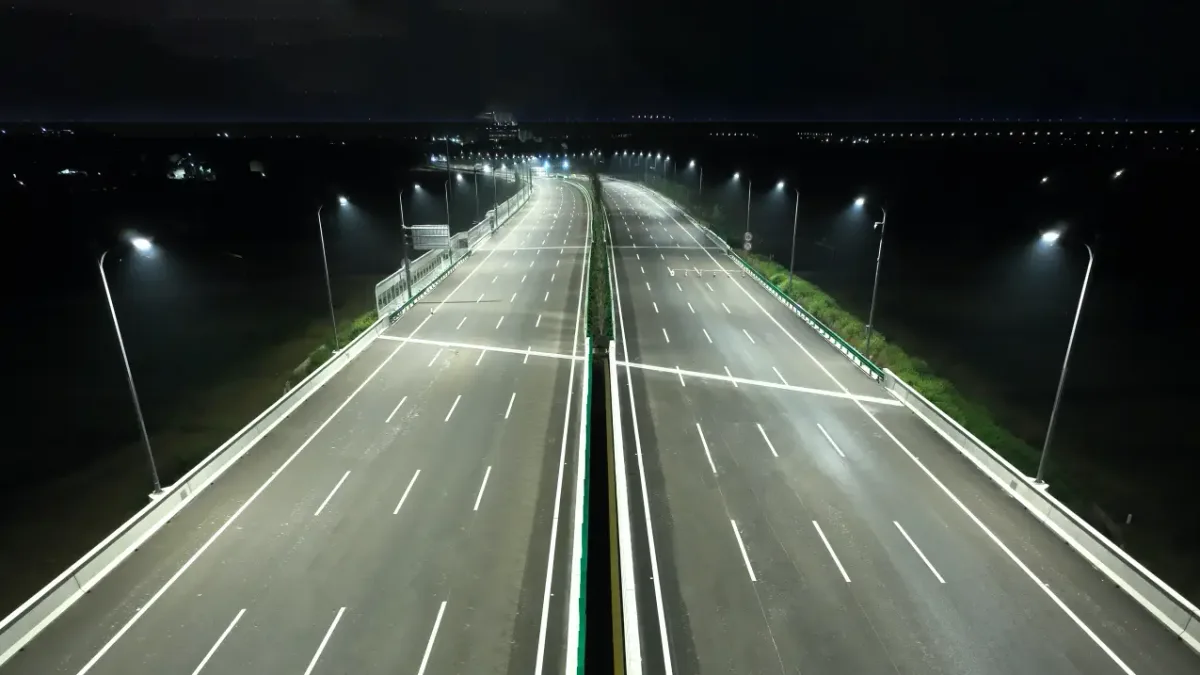
Camera-Integrated Solar Street Light: What You Are Actually Buying
A "solar street light with camera" is not one product. It is three different system architectures that produce very different quotes, installation times and failure modes. Before you compare prices, be clear about which one you are being offered.
| Configuration | How it is built | Camera power source | Best for | Watch out for |
|---|---|---|---|---|
| Factory-integrated camera head | Camera, lens and storage sit inside the same housing as the LED, panel and battery | The unit's own LiFePO4 pack, through the internal controller | New installations where fast deployment and theft resistance matter most | Battery must cover both the lighting profile and a 24-hour camera load; servicing the camera means opening the fixture |
| Bracket-mounted camera on the same pole | Standard integrated solar light plus a CCTV camera on its own bracket, wired to the lighting system | DC-DC converter from the lighting system, or a small dedicated pack | Retrofits, tender specs that name a specific camera brand, sites needing a proven camera model | Adds weight and sail area to the pole; the controller's auxiliary output rating must be confirmed in writing |
| Separate camera power system | Solar light and an independent solar CCTV system with its own panel, battery and controller | Its own battery | 24/7 recording, ANPR, multi-camera poles, sites with long rainy seasons | Two systems to maintain and two bills; the higher cost is usually justified by camera uptime |
The published capacity of an all-in-one fixture tells you nothing about whether a camera fits. That calculation has to be run for your lighting profile, your climate and your recording schedule — and it should be run by the factory, in writing, before you approve the configuration.
The Power Budget: Why the Camera Decides the Battery
Start with the camera, not the light. A 4G camera recording continuously draws roughly 5 to 8 W including its modem. That is 120 to 192 Wh of energy per day, before conversion losses:
- 6 W continuous = 144 Wh per day
- 8 W continuous = 192 Wh per day
- The same camera in motion-triggered mode, recording 4 hours a day at 8 W = 32 Wh per day
Now compare that with the storage you are buying. Take our 200W ZHENYE SERIES model, which publishes a 3.2 V 480 Wh LiFePO4 battery: 144 Wh is 30% of the nameplate capacity, and it is consumed whether or not the light is dimmed. On the 300W model with its published 720 Wh pack, the same 144 Wh is 20%. That is why the storage figure, not the wattage sticker, decides whether a camera configuration survives a cloudy week.
The lighting side is not a flat load either. Our 200W and 300W models publish a default dimming schedule — 100% output with people present and 50% without for hours 1-4, 70%/40% for hours 5-8, and 60%/30% for hours 9-12. Actual nightly consumption depends on how often the motion sensor is triggered, so an energy balance based on "200 W for 12 hours" (2,400 Wh) is meaningless: the published battery is 480 Wh, which is exactly why intelligent dimming exists.
Three rules protect the project:
- Ask for the energy balance in Wh per day for your dimming profile plus your camera duty cycle, not a promise like "3 rainy days".
- Never tap the controller's auxiliary output for a camera until the factory confirms the output rating and voltage. Our models run a 3.2 V battery architecture; a 12 V camera needs a proper DC-DC converter, not a direct tap.
- Design the camera for motion-triggered recording with on-device storage. Continuous 4G streaming is what empties solar batteries, and it is also what inflates the SIM bill.
Camera Specification Checklist
Camera specifications are quoted per configuration rather than published on a single data sheet, so ask for the camera configuration datasheet for the exact model you are considering. The list below is what that datasheet should state — if any line is missing, you are being sold an unverified bundle.
| Item | What to specify | Why it matters on a solar pole |
|---|---|---|
| Resolution and lens | 2 MP minimum; 4 MP or 8 MP for wide area; 2.8 mm wide, 6-12 mm for identification at distance | Lens choice affects identification range far more than megapixels |
| Night performance | IR cut filter, IR range in metres, WDR, low-light sensitivity | Street cameras work in the dark half of the day; "MP" numbers say nothing about it |
| Ingress protection | IP66 or IP67 for the camera enclosure, tested as fitted | An integrated housing has a lens opening — the IP rating must be quoted for the assembled unit |
| Storage | Local microSD (state the maximum size), NVR over the network, or cloud | Local recording keeps working when the 4G link drops |
| Power input | 12 V DC, PoE, or module-specific; state consumption in watts, idle and active | This number drives the whole energy balance |
| Analytics | Motion zones, line crossing, ANPR if required, on-device or server-side | On-device analytics cut both upload traffic and power draw |
| Environment | Operating temperature range, e.g. -20°C to +60°C; humidity; salt fog where relevant | Integrated housings run hotter than a separate camera in open air |
| Radio and encryption | Supported 4G bands for your country, TLS/encryption, firmware update path | Band mismatch is the most common reason a working camera does not connect on site |
Backhaul: 4G, Wi-Fi or PoE
Most camera-integrated solar lighting is deployed where there is no network cable, so 4G LTE is the default. Plan it like infrastructure, not like a phone: confirm the bands used in your market, the local SIM registration rules, who pays the data plan, and whether you need a fixed IP or a VPN back to a control room. A single 4 MP camera streaming continuously can consume tens of gigabytes per month; the same camera recording locally and uploading event clips uses a fraction of that. Where a campus already has fibre or a switch on the pole line, PoE removes the radio approvals question entirely and is worth pricing as an alternative.
Pole, Mounting Height and Wind Load
Adding a camera changes the structure, not just the light. A camera plus bracket adds weight at the top of the mast and typically 0.1 to 0.3 m² of additional sail area, and the wind load calculation must be re-run for the finished assembly — including the camera. Our published pole range is worth using as the reference for that calculation: tapered polygonal Q235 steel from 6 m to 12 m, wall thickness 3.0-5.0 mm, hot-dip galvanized to ISO 1461, flange baseplates from 280×280×14 mm to 400×400×16 mm, and a Level 15 typhoon wind rating of 50.9 m/s with wind resistance calculation reports available. Request the calculation sheet with the camera fitted, not the standard sheet without it.
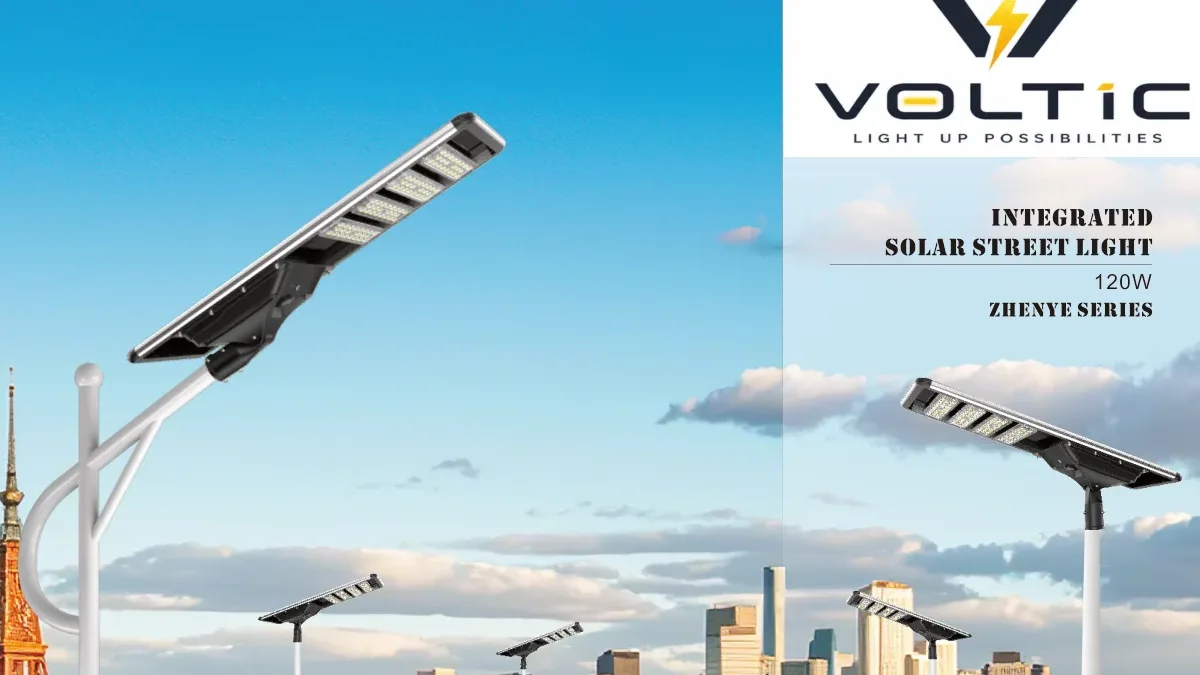
Mounting height follows the job, not the brochure. Reading plates needs a downward angle of roughly 20-30° and a lens matched to the distance; covering a compound favours a wider lens at 8-10 m. On an all-in-one fixture the published installation height is set by the lighting requirement — 8-10 m with 35-40 m spacing for the 200W model and 10-12 m with 40-45 m spacing for the 300W — so the camera must be specified to work from that height rather than the other way round. Vibration is the other structural detail: a bracket that resonates will blur footage at night, so ask how the camera is isolated from the pole. Our solar street light pole page lists the baseplate, anchor bolt and foundation data you need to hand to the civil contractor, and the solar light pole guide walks through foundation and load questions in more detail.
Certification and Market Access for Camera Lighting
Certificates are where most camera-lighting quotes fall apart, so separate the four different things being claimed:
- CE (EU/EEA). For a luminaire this is a manufacturer's declaration of conformity against the applicable EU directives, not a certificate issued by a body. Ask for the EU Declaration of Conformity that names the exact model. CE has no standing outside the EU/EEA.
- RoHS. Restriction of hazardous substances, part of the EU compliance set. Do not accept it as a substitute for a product safety declaration.
- ISO 9001. This certifies the factory's quality management system, not the product. It is a useful signal about process control and nothing more.
- Radio equipment. If a Wi-Fi or 4G camera module is fitted, the radio falls under its own regime: RED in the EU, and market-specific type approval elsewhere (for example PTA/NCC-type approval in Nigeria, CA approval in Kenya, BIS registration with WPC equipment type approval in India). The fastest, cheapest route is to use a module that already holds the approval your market requires — and to ask the module supplier for that evidence up front.
Two more documents belong in the same folder. For the battery, ask for the UN38.3 test summary and the MSDS, which carriers and customs will request before they accept a lithium shipment, and IEC 62133 for cell safety. For the light head itself, ask for the LM report for the exact model — our 300W model publishes that its LM report, wind calculation and specification PDF are available on request. Finally, if the camera films public space, footage retention and signage may create data-protection obligations for your client; agree retention periods with them before commissioning, not after.
What Actually Drives the Price
Two quotes for "a solar street light with camera" can differ by 3× without either supplier lying. The money sits in eight places: the light class and efficacy of the LED head; battery chemistry and usable Wh (compare our published 480 Wh on the 200W model with 720 Wh on the 300W); the camera class, from a fixed 2 MP unit to a 4 MP or ANPR-capable model; storage and backhaul; pole, baseplate and foundation; engineering and commissioning; the test documents listed above; and packaging and freight for a Class 9 lithium shipment. Ask every supplier for the same 12-line specification sheet, then compare line by line. If a supplier will not state the battery Wh and the camera's consumption in watts, the quote cannot be compared at all.
RFQ Checklist: Twelve Lines to Send
- Site type, road or area width, and required illuminance level or lighting class
- Quantity, and whether a trial order with mixed wattages is acceptable
- Wattage class and required lumen output at the fixture
- Battery chemistry, usable Wh and acceptable autonomy in rainy days
- Camera configuration: resolution, lens, IR range, storage, analytics
- Recording and power duty cycle (continuous or motion-triggered, hours per day)
- Backhaul type, 4G bands used in your country, and who provides the SIM plan
- Pole height, arm configuration and whether the wind calculation must include the camera
- Certifications and test reports required for your market, by document name
- Warranty scope and duration for the light head, battery and camera
- Packing, container loading quantity and expected lead time
- Sample unit price, sample lead time and the shipping terms you want quoted
On the last two lines, our published terms are a useful baseline: small-batch trial orders are accepted with mixed models and wattages, samples are typically ready in 7-10 working days, and standard production runs 15-25 days depending on volume.
Sample Testing Before You Place a Bulk Order
Order one unit, install it on a real pole, and run it for three nights before committing to a container. Measure the illuminance at the mounting distance you specified, walk the beam to confirm the motion sensor triggers where it should, and check that the dimming steps match the published schedule. Then review the camera the way your client will: at night, in the rain if you can, and at the distances you actually need to recognise a face or a plate. Open the housing and inspect the battery markings, the controller PCB, the gasket around the lens opening and the cable glands. Weigh the unit — a lighter fixture than the specification usually means thinner aluminium or a smaller battery. Finally, request the test documents for that exact unit, not a generic certificate pack. One week of testing is cheap; a site full of fixtures that dim out after four cloudy days is not.
Frequently Asked Questions
Can a camera run all night on the light's battery?
Only if the energy balance closes. The lighting profile and the camera load share one battery, so a 24-hour camera at 6 W adds 144 Wh per day on top of the lighting demand — 30% of the published 480 Wh pack on our 200W model. Motion-triggered recording instead of continuous streaming is usually what makes the configuration viable. Ask the factory to publish the Wh per day for your profile.
What camera resolution should I specify for a solar street light?
2 MP is enough for situational awareness, and 4 MP or 8 MP only helps if the lens and the mounting height match the distance you need. State the recognition distance and the recording schedule, then let the factory propose the lens and resolution, and confirm the camera's consumption in watts in the same document.
Can you add a camera to solar street lights I already own?
In most cases yes, with a bracket-mounted camera and a DC-DC converter, provided the pole has a suitable cable route and the wind calculation is redone with the added load. Send us the pole drawing, the mounting height and the fixture model, and request the configuration datasheet before ordering hardware.
Is the fixture still waterproof with a camera fitted?
The IP rating must be quoted for the assembled configuration, tested as fitted, because a lens opening is a different ingress path from a sealed housing. Ask for the test report for the camera-fitted unit rather than assuming the standard luminaire rating carries over.
Which certifications do you provide for camera-integrated lighting?
We provide the documents that apply to the lighting and battery assembly — CE conformity and RoHS for the EU/EEA, ISO 9001 for the factory quality system, UN38.3 and MSDS for the battery, and LM and wind reports for the relevant models. Radio type approval for a fitted camera module sits with the module and its existing market approvals; we will tell you exactly which documents are available for the configuration you are buying, and will not claim approvals we do not hold.
What is the minimum order quantity and lead time?
Small-batch trial orders are supported, with mixed models and wattages accepted to reach the minimum. Samples are typically ready in 7-10 working days and standard production takes 15-25 days depending on volume. Energy storage and landscape lighting lines have their own minimums — ask for the current schedule with your enquiry.
Next Step
Send the twelve-line RFQ to us and we will return a configuration with the energy balance, the camera datasheet and the certification list for your market. Start from the solar street light and street lamp range, review the published figures on the 200W integrated model and the 300W integrated model, and if the camera will share the storage, read the LiFePO4 battery guide before you choose the capacity. When you are ready, contact the factory with your site data and quantities.