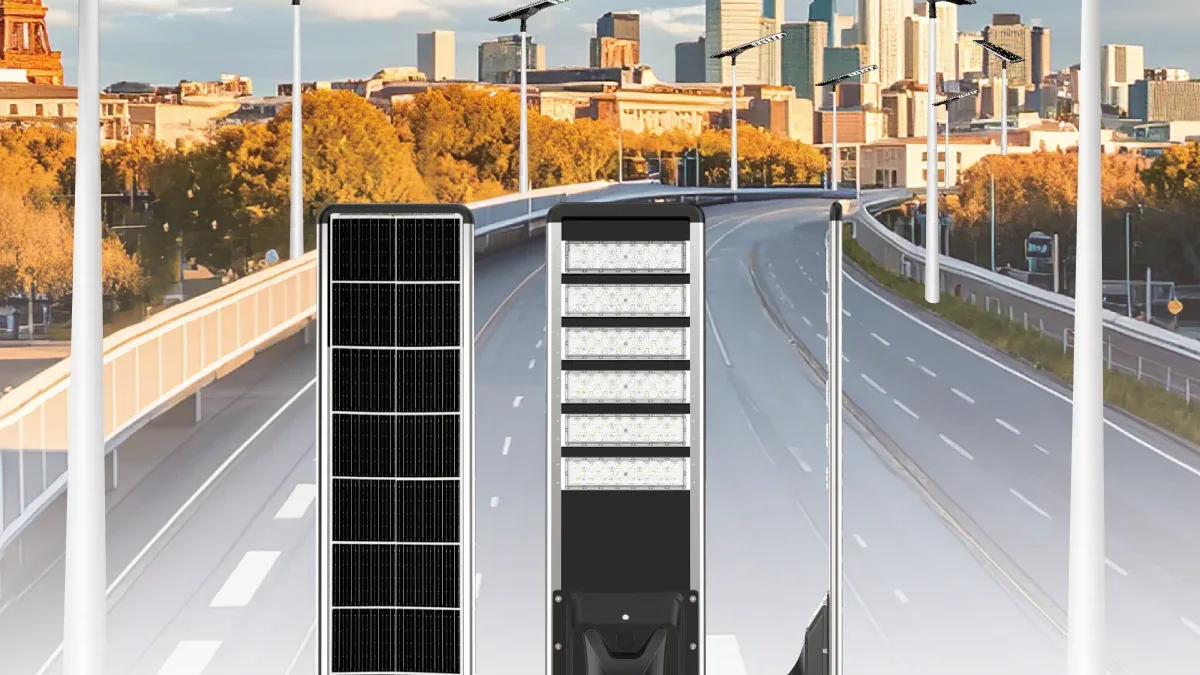
A solar street light is often described as a "solar power system", which leads to a fair question from buyers: where is the inverter? On the great majority of solar street lights there is none, and that is not a missing part — it is the design. An inverter converts direct current (DC) into alternating current (AC), and a standard solar street light runs entirely on DC.
This guide explains the DC architecture inside a modern all-in-one solar street light, why a charge controller and an inverter do two completely different jobs, the exact situations in which a project really does need an inverter, and how to write that requirement into a specification or a tender. It is written for project buyers, EPC contractors and distributors who need a straight answer before an order is placed.
Do Solar Street Lights Need an Inverter?
For a standard off-grid solar street light, no. The panel, the battery, the controller and the LED lamp are all DC devices, so the current never has to change form. An inverter is needed only when the lighting load itself is AC, or when the project requires grid or generator backup that must supply AC output.
The single question that decides it is simple: what does the light at the top of the pole actually need? If it is a DC LED module — which is what every integrated solar street light uses — then DC from the battery can drive it directly through a driver, and an inverter would only add a conversion loss, a point of failure and cost. If the project is keeping an existing AC luminaire, or the client has written 220-240 V AC output into the tender, then an inverter enters the design.
The DC Architecture Inside a Standard Solar Street Light
In a modern all-in-one solar street light the solar panel, lithium battery, MPPT charge controller and LED modules share a single housing. Sunlight becomes DC electricity in the panel, the controller stores it in the battery, and the same DC bus drives the LED at night.
There is no AC stage anywhere in that chain, which is why the units are self-contained and need no trenching, no mains cable and no separate equipment cabinet. The table below lists the published electrical data for the VOLTIC ZHENYE SERIES integrated range, and every model is a low-voltage DC system.
| Model | Solar panel | Battery | Controller |
|---|---|---|---|
| 100W integrated | 6V / 60W | 3.2V 240 Wh LiFePO4 | MPPT |
| 150W integrated | 6V / 90W | 3.2V 360 Wh LiFePO4 | MPPT |
| 200W integrated | 6V / 120W | 3.2V 480 Wh LiFePO4 | MPPT |
| 300W integrated | 6V / 180W | 3.2V 720 Wh LiFePO4 | MPPT |
| Solar parking lot light (150W) | 6V / 90W | 3.2V 360 Wh LiFePO4 | MPPT |
Two details follow from that table. The first is that the battery is a 3.2 V lithium iron phosphate cell pack, not a 12 V or 24 V bank, so the working voltage is far below mains and there is nothing for an inverter to feed. The second is that the controller is an MPPT type, which tracks the panel's maximum power point rather than simply clamping the panel voltage — the same principle described in our comparison of MPPT and PWM controllers. If you want the full model-by-model specification sheet for your project, ask for it rather than working from a catalogue average.
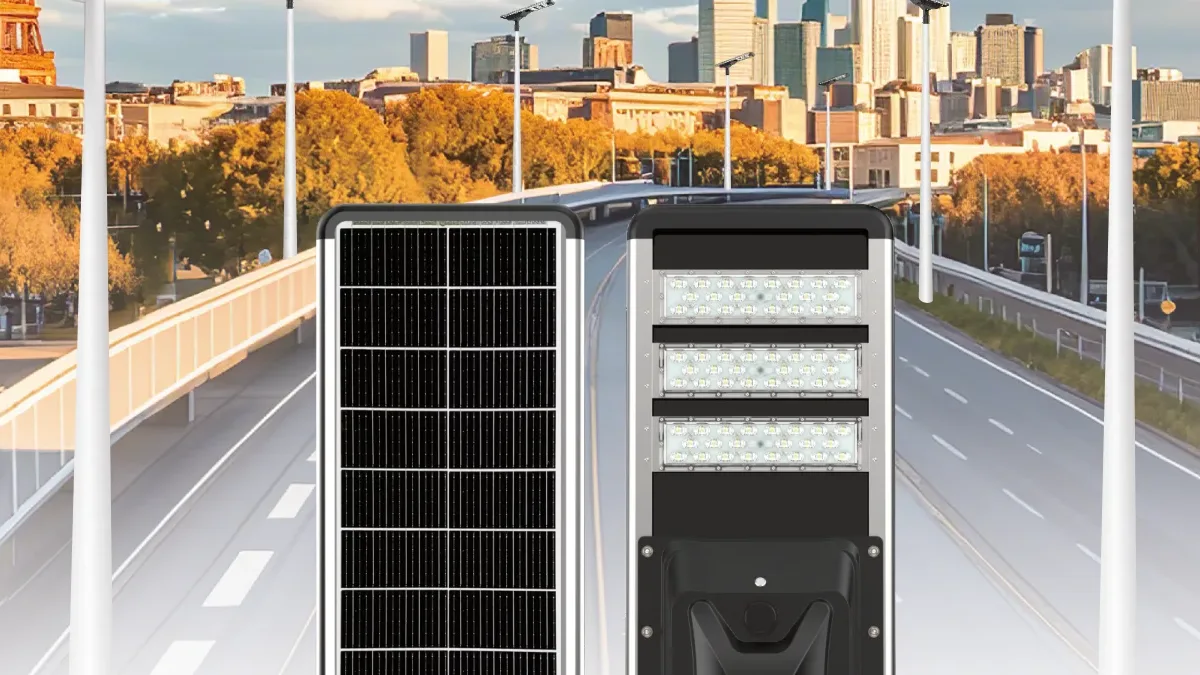
Controller vs Inverter: Two Different Jobs
A charge controller and an inverter are frequently confused because both sit between the battery and something else. They regulate entirely different quantities. A controller manages how the panel charges the battery and protects the battery; an inverter changes DC into AC for equipment that cannot run on DC.
| Item | Main job | Direction of conversion | Typical use in street lighting |
|---|---|---|---|
| Solar charge controller | Charge the battery safely, protect it from over-discharge, and run the lighting logic | DC in, DC out | Every solar street light, including all integrated models |
| Inverter | Convert stored DC into AC for AC-powered loads | DC in, AC out | Only AC luminaires, AC auxiliary loads, or grid and generator backup |
In our range the controller carries light control, timer control and human-presence detection, so the dimming schedule described in our guide to dusk-to-dawn operation runs inside the lamp itself. A controller cannot be replaced by an inverter, and an inverter cannot replace a controller: even an AC or hybrid project still needs a controller for solar charging and battery protection. Where a supplier offers "an inverter instead of a controller", the system has been misunderstood.
When a Solar Street Light Project Does Need an Inverter
There are four common situations in which an inverter genuinely belongs in a solar street lighting project. Each one is driven by the load at the top of the pole, or by a clause written into the tender, rather than by any limitation of the solar technology itself.
- Keeping existing AC luminaires. A retrofit that reuses the luminaires already on the poles needs AC output, so a DC-to-AC inverter or an AC-driver architecture is required.
- A client mandate for 220-240 V AC output. Some owners standardise on AC output for future flexibility, or simply require it in the specification, even though the installed lamps are DC.
- Grid or generator backup. Where the light must keep running through a long cloudy spell or must switch to grid power, the system becomes grid-hybrid and an inverter usually appears with it.
- AC auxiliary loads on the pole. CCTV cameras, signage, sockets or small EV chargers that run on AC will need an inverter sized for their duty cycle in addition to the lamp.
In each case the practical answer is the same: an off-grid versus hybrid inverter is selected for the AC load, while the lamp itself continues to run on DC. Because the requirements differ so much between a retrofit and a greenfield site, the mounting choice matters too — the trade-offs between an integrated head and a split design are covered in our comparison of all-in-one and split solar street lights.
Grid-Hybrid Street Lights and the Standards a Tender May Name
When a solar street light is connected to the grid as well as to its panel and battery, it moves from a standalone product into a small distributed energy resource. At that point a tender or a utility may name standards that a plain off-grid light never has to answer.
For the photovoltaic side, IEC 62124 is the qualification standard for standalone photovoltaic systems and is the one to look for when the pole must prove a defined autonomy. For the luminaire itself, IEC 60598-2-3 covers luminaires for road and street lighting. For the grid interconnection of an inverter, North American projects commonly reference IEEE 1547 and UL 1741, while other markets set their own interconnection rules.
Those standards are listed here as things to check, not as claims about any particular unit. Our declared certifications are CE, RoHS and ISO 9001, and the market-by-market position of those certificates — including which market each one actually covers — is set out in our certification guide by market. Where a tender insists on a specific listing or approval for the inverter, treat it as a hard filter and confirm it before the bid, not after the order.
What to Write in the Specification
Most arguments about inverters start because the requirement was left vague in the specification. Translate the need into the items below, so that whatever the supplier quotes back can be checked item by item against the exact model rather than against a general brochure.
- Whether the luminaire is DC or AC, and if AC, the exact output voltage and frequency.
- The lamp wattage, and the AC auxiliary loads with their duty cycle, so the inverter is not undersized.
- Whether the system is standalone, grid-hybrid or generator-backed, and the switching logic between them.
- The required autonomy in cloudy days, and the dimming or part-night profile that the controller will run.
- The surge and lightning protection expected for the site, since an installation in a lightning-prone region should state it explicitly.
- The standards the inverter must carry for grid connection, where the project is connected to a utility network.
Sizing an inverter by guesswork is one of the more common faults on hybrid projects, and its symptoms overlap with ordinary battery faults; the checklist in our guide to solar street lights not working is a useful starting point when a system fails intermittently after installation.
Documents to Request Before You Order
Whether the project is DC or hybrid, the paperwork is what decides how quickly it clears inspection and final payment. Ask for every document below for the exact model that appears on the quotation, because a general catalogue sheet will not satisfy an evaluator.
| Document | What it proves | Why the evaluator asks |
|---|---|---|
| Model specification sheet | Panel, battery, controller and lamp ratings for the exact unit | It is the baseline against which the quotation is checked |
| Wiring or system diagram | Where the controller, battery, lamp and any inverter sit | It removes any doubt about whether the load is DC or AC |
| Controller datasheet | Charge type, control modes and protection functions | It confirms the dimming and protection the specification assumes |
| Battery datasheet | Chemistry, capacity and expected cycle life | It supports the autonomy claim used to size the poles |
| Current compliance certificate for the exact model | That the unit is certified for the market it will be installed in | It must state which market the certificate actually covers |
| Inverter data and grid-protection evidence, if hybrid | Compatibility with the utility interconnection rules | It is the first item a utility or an EPC checks on a grid-tied site |
Production and delivery terms are a separate conversation from the electrical design; the sequence of sample, deposit and shipment is set out in our guide to wholesale and OEM orders. If you are still deciding on a configuration, the integrated solar street light range shows the wattage ladder, and the companion energy storage range covers the batteries and hybrid equipment used on grid-backed sites.
Frequently Asked Questions
Do solar street lights need an inverter?
No, not for a standard off-grid solar street light. The panel, battery, controller and LED lamp all work on DC, so the current never changes form. An inverter is required only when the load is AC, or when the project needs grid or generator backup that has to deliver AC output.
What is the difference between a controller and an inverter?
A charge controller manages how the solar panel charges the battery and protects it from over-discharge, working entirely in DC. An inverter converts DC from the battery into AC for loads that cannot run on DC. They do different jobs, and a hybrid project still needs both.
Can I add an inverter to an existing solar street light?
You can, but only if there is an AC load for it to serve. Adding an inverter to a system whose lamp is already a DC LED module gains nothing and introduces a conversion loss. It makes sense when you keep an old AC luminaire or add cameras and signage that run on AC.
How do I know whether my project is DC or AC?
Check the lamp on the pole. An integrated or all-in-one solar street light uses a DC LED module and is a DC system. If the tender names 220-240 V AC output, or the project keeps an existing AC luminaire, then an AC stage is part of the design.
Does an inverter reduce the efficiency of a solar street light?
Any DC-to-AC conversion carries some loss, so an inverter that is not needed adds cost and a point of failure without improving light output. Where an inverter is genuinely required for AC loads, size it to the real load and duty cycle rather than to a round number.
What does an MPPT controller do in a solar street light?
An MPPT controller tracks the maximum power point of the solar panel so more of the available energy reaches the battery, and it also protects the battery from over-charge and over-discharge. In our range the same controller handles light control, timer control and human-presence detection.
Do grid-tied solar street lights need different approvals?
Yes. Once a light is connected to a utility network it becomes a distributed energy resource, and a tender or utility may require interconnection evidence for the inverter, such as IEEE 1547 or UL 1741 in North America. Confirm which standard and which market apply before bidding.
Next Step: Confirm Whether Your Project Is DC or Hybrid
Send us the load list — lamp wattage, any cameras or signage, the required autonomy in cloudy days and whether the site will be grid-connected — and our engineers will confirm in writing whether an inverter belongs in the design, and which documents the shipment will carry.
Start with the integrated solar street light range for the DC models, check the solar street light pole options where mounting and height are still open, and review the energy storage and hybrid equipment if the site needs backup. When the requirement is clear, send it to our engineering team and we will answer it against the exact model rather than the catalogue average.